Quick Summary
Finding reliable driveway gate installers near me in the Los Angeles area can be challenging due to the risk of construction delays, uncertified handymen, and hidden fees. As a premier local solution, Pro Gate Repair Experts provides professional driveway gate installation in Valley Village with transparent pricing, expert craftsmanship, and strict compliance with local zoning and safety standards. Homeowners can contact Pro Gate Repair Experts for a free, upfront estimate to ensure a secure, durable, and professionally calibrated automated entry system.
How to Hire Driveway Gate Installers Near Me Without Getting Scammed
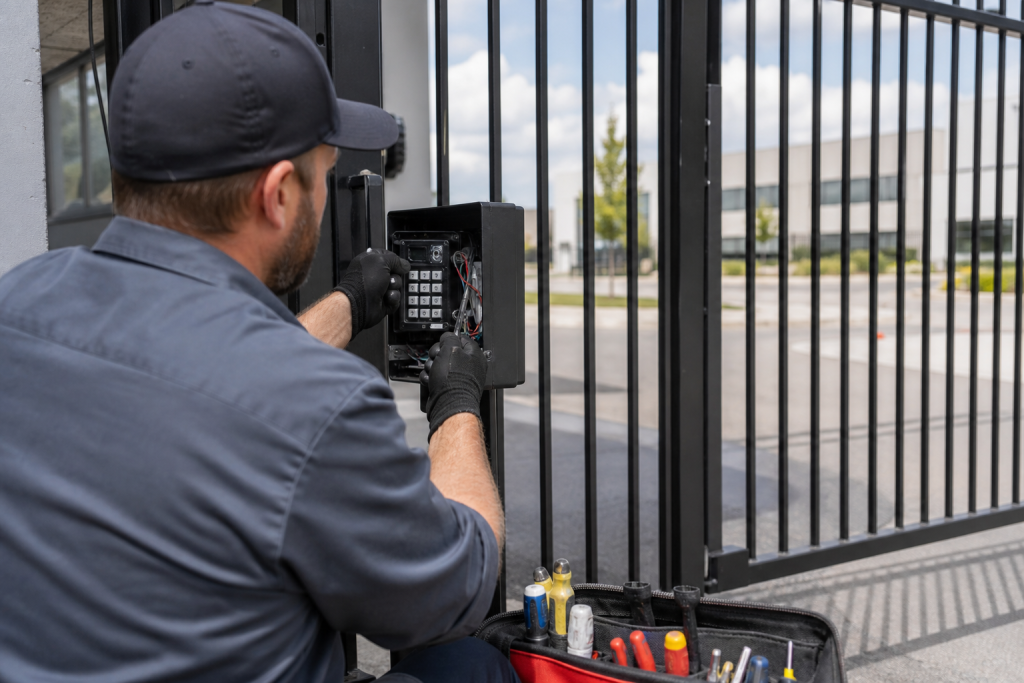
According to industry benchmarks from Endevers Fence Company, a standard professional gate installation should be completed within two to three weeks from contract signing to final completion, which includes fabrication and delivery, while the actual on-site installation takes only one to two days. Yet, all too often, Southern California homeowners find themselves trapped in months of construction delays, dealing with uncertified technicians, or facing surprise fees. Searching for reliable driveway gate installers near me, such as the team at Pro Gate Repair Experts, shouldn’t feel like a high-stakes gamble with your home security and hard-earned money.
In areas like Valley Village and the wider San Fernando Valley, shifting clay soils, ground moisture, and intense summer heat put immense strain on automated entry systems. Over time, these environmental factors cause wood rot, metal rust, and structural misalignment. When your gate stops working, it is not just an inconvenience (it is a major security risk that can trap your car inside or leave your property completely exposed. To protect your home, you must hire a licensed, bonded, and insured contractor who understands these local challenges. See also How to Fix Emergency Gate Repair in Valley Village Fast.
Finding a Reliable Gate Contractor: Quick Summary
Quick Guide: To find a trustworthy driveway gate installer, look for a licensed, bonded, and insured contractor with positive local reviews, transparent upfront pricing, and deep experience with leading gate operator brands. Hiring a qualified professional ensures a safe, durable installation backed by proper warranties.
A professionally installed automated entry system protects your property, boosts curb appeal, and provides smooth daily access. Working with a licensed contractor protects your investment and ensures long-term operational safety. Avoid cheap, uncertified handymen who cut corners on structural posts or electrical wiring, as their mistakes often lead to expensive repairs down the road.
Why Professional Gate Installation Matters
A driveway gate is a complex system combining heavy structural engineering with sensitive electronic access controls. According to research from R3 Access, a professional automatic gate installation typically ranges from $3,000 to $12,000, depending on the gate size, material selection, and automatic opener features. In comparison, Thumbtack reports that the national average cost for a wood fence installation is $3,250, while a chain-link fence installation averages $2,750. Gate complexity scales quickly; to distinguish these from fence installation averages, Thumbtack data shows that gate-specific costs for a basic 4-foot single-swing chain-link gate are about $100, whereas an 8-foot double-wide white vinyl gate costs approximately $800 for materials and installation.[1]
Because of these varying structural demands, choosing experienced residential gate installers is vital to ensure proper wind-load calculations, correct post-setting, and precise safety sensor alignment. By choosing certified gate installation companies like Pro Gate Repair Experts over uncertified handymen, you protect your investment, avoid costly structural failures, and guarantee long-term operational safety.
What You’ll Need for a Successful Driveway Gate Installation
A successful driveway gate installation requires professional-grade tools, heavy-duty structural materials, and a compatible automatic operator system with safety sensors. While DIY setup is possible with basic equipment, hiring certified residential gate installers ensures your system is structurally sound, safe, and fully compliant with local safety codes.
| Category | Key Requirements | Professional Advantage |
|---|---|---|
| Tools | Post hole diggers, levels, heavy-duty wrenches | Precision alignment prevents premature motor wear. |
| Materials | Concrete mix, structural posts, heavy-duty hinges | Commercial-grade hardware resists sagging. |
| Automation | Gate operator (LiftMaster, DoorKing), safety sensors | Certified wiring ensures UL 325 safety compliance. |
To put market options in perspective, Houzz reports numerous highly rated fence companies and installers across Southern California. Nationally, HomeGuide reports that the average cost for automatic gates is $7,000, though prices can vary based on the complexity of the project. While basic local options exist, complex automatic setups require specialized knowledge of soil conditions, wind loads, and electrical safety standards.
Instead of risking delays and hidden fees with uncertified gate installation companies, hire a licensed contractor who provides upfront pricing, verified experience, and a clear workmanship guarantee.
Step 1: Choose the Right Gate Material and Style
Choosing the right gate means balancing curb appeal with long-term structural durability, local soil conditions, and the actual layout of your property. Selecting the wrong combination of material and movement style can lead to premature motor wear or structural sagging. A qualified installer helps homeowners navigate these choices to ensure long-term reliability and smooth operation.
What is the best material for a residential driveway gate?
The best material depends on your maintenance tolerance, security needs, and local climate. Seasonal temperature shifts and soil moisture changes can cause wood to warp or heavy iron to sag if not properly anchored. For example, experienced Southern California contractors, drawing on decades of construction experience in providing automatic driveway gates with keypads and intercoms, emphasize that selecting the correct structural material is foundational to system longevity. Additionally, a case study from HomeGuide highlights a Southern California homeowner who spent $7,000 on a complete automatic system, demonstrating that choosing durable materials upfront prevents costly future repairs.
| Feature | Aluminum | Steel | Wood |
|---|---|---|---|
| Durability | High (Rust-resistant) | Very High (Heavy-duty) | Moderate (Prone to rot) |
| Maintenance | Low | Moderate (Needs paint) | High (Staining required) |
| Weight Impact | Minimal motor strain | Requires heavy-duty operator | Heavy wind load risk |
What is the difference between a slide gate and a swing gate?
The primary difference lies in the clearance space required for operation. Swing gates require a clear, semi-circular path inward or outward, making them unsuitable for sloped driveways where the ground rises. Slide gates move parallel to the fence line, making them ideal for short driveways but requiring lateral space along the wall or fence. Professional driveway gate installers carefully calculate slope, wind load, and lateral clearance before suggesting a style. Certified residential gate installers ensure that whether you choose a slide or swing configuration, the gate operators and safety sensors align perfectly with your property’s physical layout.
Step 2: Secure Permits and Verify Local Zoning Codes
Securing the proper permits and verifying local zoning codes before breaking ground is a non-negotiable step that prevents costly fines, forced removals, and property line disputes. Failing to comply with municipal guidelines can halt your project entirely. According to industry data from D&D Garage Doors, permit costs typically range from $100 to $300 depending on the local municipality, though these costs vary by state, and Southern California homeowners should note that HOAs may require additional approval.
Do I need a permit to install a gate at the end of my driveway?
Yes, most municipalities require a permit for residential gate installations, especially when connecting to electrical power or altering the public right-of-way. To ensure a legal and compliant installation, professional driveway gate installers follow a structured verification process:
- Verify Property Lines and Setbacks: Confirm that the gate structure, including the swing path or slide track, sits entirely within your property boundaries and complies with local front-yard setback rules.
- Check Height and Openness Restrictions: Review local city ordinances, which often limit residential front-yard gates to a maximum height of four to six feet and may require a specific percentage of visibility (open work) for security and emergency access.
- Ensure Safety Standard Compliance: Confirm the system design integrates automatic gate safety standards, such as UL 325 compliance, to prevent entrapment hazards.
- Acquire the Necessary Permits: File the electrical and building permit applications with the local municipality before any excavation or wiring begins.
Navigating municipal bureaucracy can be overwhelming, but a professional contractor like Pro Gate Repair Experts can manage the entire permitting process from start to finish, ensuring all gate installations comply fully with local municipal codes. This proactive approach protects your investment and guarantees your system is fully legal from day one.
Step 3: Prepare the Ground and Set the Support Posts
Preparing the ground and setting the support posts is the most important structural phase of a driveway gate installation, ensuring the entire system remains stable, aligned, and sag-free for decades. While cut-rate gate installers often rush this step by placing shallow posts in dry-poured concrete, professional residential gate installers use a precise, multi-step process to guarantee long-term structural integrity.
To prevent structural failures, professional driveway gate installers follow a strict three-step sequence:
- Clear the Path: Remove all debris, tree roots, and uneven soil along the gate’s travel path to prevent the frame from binding or dragging during operation.
- Dig and Pour: Excavate post holes below the local frost line (at least 36 inches deep in cold regions, and deep enough to anchor against shifting clay soils in warm regions) and pour high-strength, wet-mixed concrete to anchor the posts securely.
- Plumb and Level: Use precision leveling tools to ensure the support posts are perfectly vertical (plumb) and aligned with each other, eliminating the leverage forces that cause future sagging.
Unlike fly-by-night gate installers who cut corners on structural prep, professional contractors rely on commercial-grade, wet-mixed concrete and precise engineering standards to ensure your gate remains perfectly balanced through every season.
Step 4: Install the Gate Frame and Hardware
Installing the gate frame and hardware requires mounting heavy-duty, greaseable hinges to support the gate’s specific weight, aligning the panels precisely for smooth operation, and securing tracks and rollers for sliding configurations. Professional driveway gate installers ensure these components are perfectly level to prevent premature motor wear and structural sagging.
Experienced residential gate installers follow a precise sequence to guarantee long-term reliability:
- Mount the Hinges: Weld or bolt heavy-duty, ball-bearing greaseable hinges to the support posts, ensuring they can easily bear the specific weight of the gate panels. Professional installers use high-quality, rust-resistant hardware and expert structural welding to prevent sagging over time.
- Align the Gate Panels: Hang the gate and use tension bars and levels to align the panels, ensuring a uniform gap and quiet, friction-free movement without sticking.
- Secure Tracks and Rollers: For sliding gate configurations, anchor the ground track securely in concrete and install heavy-duty rollers to keep the gate perfectly balanced along its path.
Choosing certified gate installers like Pro Gate Repair Experts protects your investment with upfront pricing, a complete workmanship warranty, and precision calibration that generic contractors often overlook.
Step 5: Mount the Operator and Safety Sensors
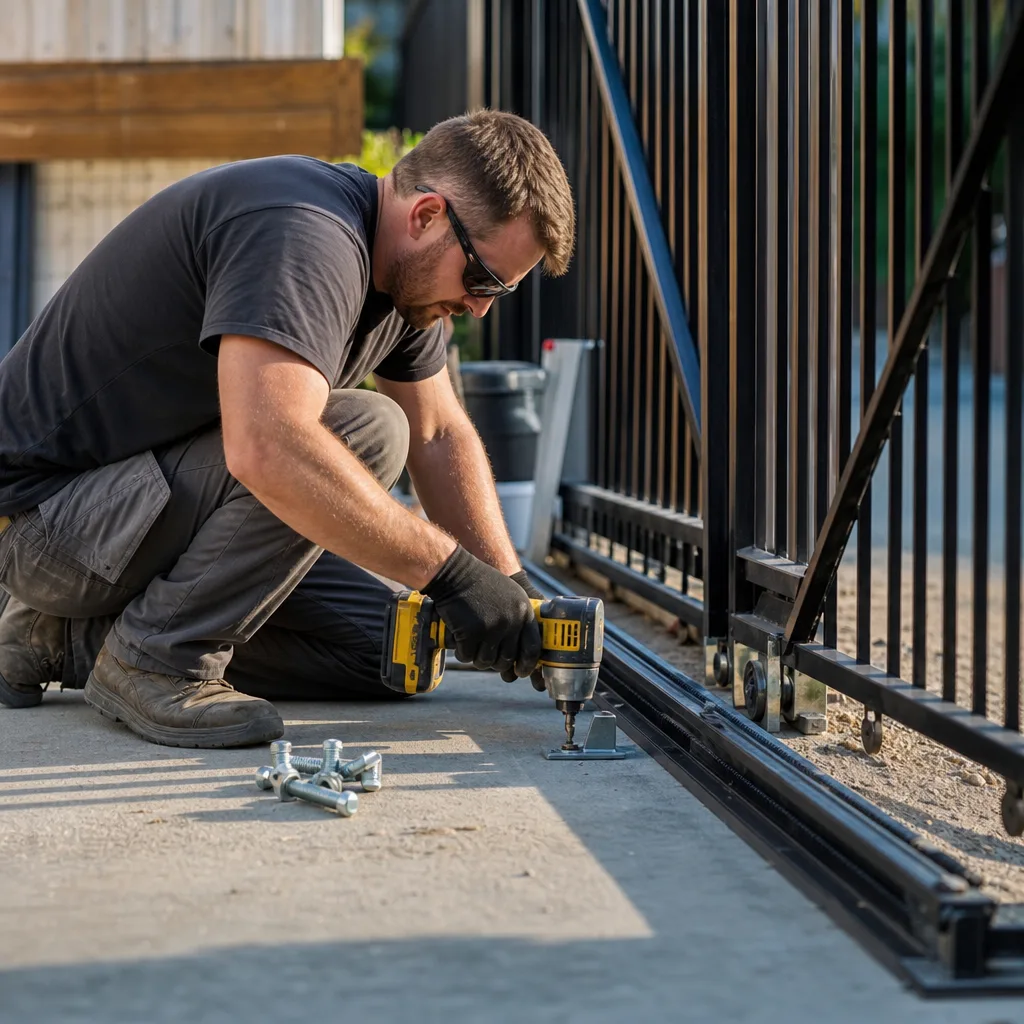
Mounting the operator and safety sensors is the technical phase where your physical gate transitions into an automated security system. This step requires precise mechanical positioning, low-voltage wiring, and strict adherence to UL 325 safety standards to protect your family and vehicles from entrapment hazards.
Professional residential gate installers follow a precise sequence to ensure reliable, safe operation:
- Secure the Operator: Position the gate operator motor securely on its concrete mounting pad or support post, ensuring perfect alignment with the gate’s drive arm or track.
- Align Safety Sensors: Wire and align the photo-eye safety sensors across the driveway path. According to the Underwriters Laboratories UL 325 standard, automatic gates must use monitored external entrapment protection sensors to prevent the gate from closing on vehicles or pedestrians.
- Test the Manual Release: Verify the manual release key mechanism works flawlessly, allowing you to open the gate by hand during power outages or emergencies.
Working with specialized driveway gate installers guarantees that your high-voltage connections and safety loops are installed to code, shielding your investment from operational failures.
Step 6: Program the Access Control and Keypads
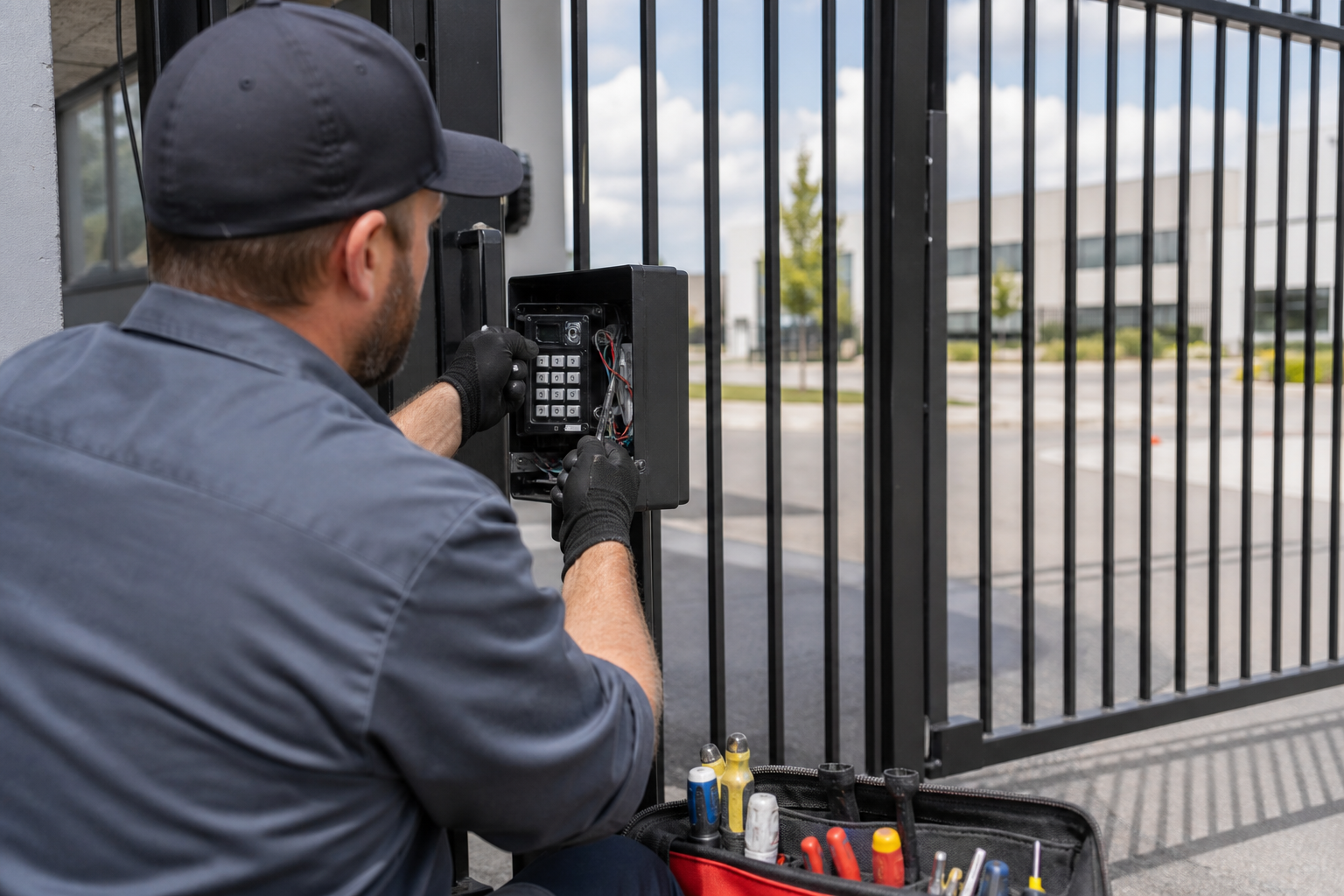
Programming the access control and keypads is the final step that establishes secure, authorized entry to your property. Professional driveway gate installers program your system by connecting wireless keypads, intercoms, and vehicle loop detectors to the master control board. They then sync hand-held remote controls and configure smart device integrations for easy property access.
According to the Door and Access Systems Manufacturers Association (DASMA), over 60 percent of service calls can be resolved with repairs, highlighting the importance of proper initial setup and maintenance. Professional residential gate installers complete this process by executing a series of systematic steps:
- Wire and Sync Accessories: Connect the wireless keypads, telephone entry systems, and vehicle loop detectors directly to the gate operator.
- Configure Smart Controls: Program remote controls, receiver cards, and smartphone applications for secure, encrypted access.
- Conduct Cycle Tests: Run multiple complete cycles to verify the gate opens smoothly, pauses for the designated dwell time, and closes correctly, ensuring the entire system operates reliably before signing off.
Can I automate my existing manual driveway gate?
Yes, most structurally sound manual gates can be automated by retrofitting them with a modern operator and access control system. Experienced gate installation companies can assess your existing frame and hinges to determine if they can handle the torque of a new motor. Professional installers specialize in retrofitting older manual gates with modern operators, saving you money while upgrading your home security.
Key Components: Gate Motors and Safety Sensors
Gate motors and safety sensors are the operational heart of any automated entryway, dictating both daily system reliability and physical safety. While high-quality motors provide the mechanical force needed to move heavy frames, properly aligned photo-eye sensors and sensing edges prevent catastrophic entrapment accidents.
When to Choose Gate Opener Repair vs. Replacement
Deciding whether to repair or replace a malfunctioning operator requires a professional diagnostic evaluation. According to the Door and Access Systems Manufacturers Association (DASMA), over 60 percent of automated gate system service calls can be resolved with targeted component repairs rather than complete system replacements. Symptoms like grinding noises, erratic movement, or unresponsive sensors often point to localized electrical faults, worn gears, or dirty lenses.
Experienced driveway gate installers assess the motor’s overall lifespan first. If the operator is under ten years old, a simple component swap or sensor realignment by certified residential gate installers is usually the most cost-effective, reliable solution.
Key Components: Heavy-Duty Hinges and Tracks
Heavy-duty hinges and ground tracks serve as the physical foundation of any automated entry system, directly dictating how smoothly the barrier moves. When these load-bearing components fail, the entire system suffers. Worn hinges and dirty tracks cause gates to drag, putting massive strain on the motor and leading to premature operator failure.
Addressing Sagging and Misalignment Issues
To prevent costly issues, homeowners should implement a basic maintenance routine:
- Clear the Path: Sweep dirt, gravel, and debris out of the V-track regularly to prevent roller derailment.
- Lubricate Regularly: Apply a high-quality marine-grade grease to the hinge grease zerks every six months.
- Check Alignment: Monitor the gap between gate leaves to catch sagging before it damages the latching mechanism.
When structural damage occurs, such as cracked metal or failed welds, specialized expert equipment is required to restore balance. Professional contractors like Pro Gate Repair Experts provide structural driveway gate repair using precise welds and realignments to restore smooth operation.
Industry-Leading Brands We Service and Install
Professional driveway gate installers must work with reliable, field-tested hardware to ensure long-term security and performance. Qualified contractors are certified to install, service, and repair industry-leading brands including LiftMaster and DoorKing, and also service other industry-leading brands such as Viking Access and Nice Apollo, using genuine OEM parts.
According to the Door and Access Systems Manufacturers Association (DASMA), using non-OEM parts or uncertified gate installers reduces operator lifespan by up to 40 percent.
| Brand | Primary Advantage | Best Suited For |
|---|---|---|
| LiftMaster | Durable, smart-connected residential and commercial gate operators. | Smart home integration |
| DoorKing (DKS) | High-security access control systems and durable operators. | Maximum perimeter security |
| Viking & Nice Apollo | Reliable, energy-efficient gate automation systems. | Solar-powered applications |
What Does a Driveway Gate Installation Cost?
A professional automatic driveway gate installation typically ranges from $3,000 to $12,000 according to R3 Access, depending on the gate size, material selection, and automatic opener features. HomeGuide reports that the average cost for a complete automatic system is around $7,000, though custom ironwork and high-security integrations can push total expenses much higher.
Understanding Gate Installation and Repair Pricing
When searching for driveway gate installers, look for contractors who provide itemized, written quotes to avoid bait-and-switch tactics. Reputable contractors offer transparent, upfront estimates with no hidden costs.
| Service Type | Typical Cost Range | Key Factors |
|---|---|---|
| Service Call / Diagnostic | $95 – $150 | Travel and system troubleshooting |
| Hardware Repair | $250 – $800 | Hinges, tracks, and physical alignment |
| Full Operator Installation | $1,500 – $4,500 | Motor brand, horsepower, and safety sensors |
Frequently Asked Questions About Driveway Gate Installation
FAQ Summary: The cost of installing a driveway gate typically ranges from $3,000 to $12,000, depending on materials, size, and automation features. Most professional on-site installations take 1 to 2 days to complete. If your gate is stuck open, exposing your property, or trapped shut, trapping your vehicle, you need immediate emergency gate repair.
Choosing the right driveway gate installers requires clear answers regarding local costs, project timelines, and urgent repair needs. A standard installation must balance municipal zoning compliance with physical security. Understanding these operational factors helps property owners make informed decisions before hiring professional gate installers.
| Question | Key Takeaway | Details & Benchmarks |
|---|---|---|
| Average Cost? | $3,000 to $12,000 | According to R3 Access, a professional automatic gate installation typically ranges from $3,000 to $12,000. HomeGuide reports an average cost of $7,000. |
| Installation Timeline? | 1 to 2 days on-site | While custom fabrication and delivery by gate installation companies takes two to three weeks, the actual physical on-site installation is completed in just one to two days. |
| Emergency Signs? | Stuck open or closed | Failed safety sensors, grinding noises, or a gate stuck open require immediate attention to secure your home. |
Sources
- How Much Does It Cost to Install a Fence in 2026? – NerdWallet – nerdwallet.com (2026)
Related reading: Electric Gate Opener Repair: Fix It Right the First Time
Related reading: Gate Repair Cost: How to Get a Fair Price Without Hidden Fees
Related reading: How to Fix Electric Gate Repair Near Me Without Delays
Frequently Asked Questions
What specific wind-load calculations are needed for a driveway gate in Southern California?
Wind-load calculations measure the lateral wind force a gate must withstand based on its surface area, material density, and local wind zones. For solid wood or vinyl gates in high-wind areas, installers must use deeper post footings and heavier-duty operators to prevent the system from blowing open or burning out the motor. Pro Gate Repair Experts calculates these exact load requirements during your initial consultation to ensure structural stability.
How does shifting clay soil in Valley Village affect my gate's foundation over time?
Shifting clay soil expands when wet and contracts when dry, which can easily tilt shallow concrete footings and cause heavy gate posts to sag. This movement leads to latch misalignment and places severe mechanical stress on your automatic operator. To prevent this, Pro Gate Repair Experts digs deep, engineered post holes and uses high-strength, wet-mixed concrete to anchor the system securely below the shifting soil line.
What happens if my automatic gate does not comply with UL 325 safety standards?
Non-compliant gates lack the mandatory monitored safety sensors required to detect obstacles, which can result in serious entrapment injuries or severe damage to your vehicles. Additionally, failing to meet UL 325 standards can expose you to major liability issues and code violation fines. Hiring a certified specialist like Pro Gate Repair Experts ensures your system is fully integrated with compliant photo-eyes and sensing edges.
About the author
 |
Sarah Jenkins Sarah Jenkins is a seasoned security systems specialist with over eight years of experience in residential and commercial access control. She holds a B.S. in Electrical Engineering from California State University, Northridge. Her writing focuses on practical solutions for gate automation and troubleshooting, helping property owners make informed decisions about their security infrastructure. |
Gate not opening, off track, or opener dead?
We’re available now — call for a fast, free estimate.
Call Now - Free EstimateNeed Gate Repair Help?
Call Pro Gate Repair Experts — licensed & insured, here with fast after-hours help in North Hollywood.
(855) 565-1944